

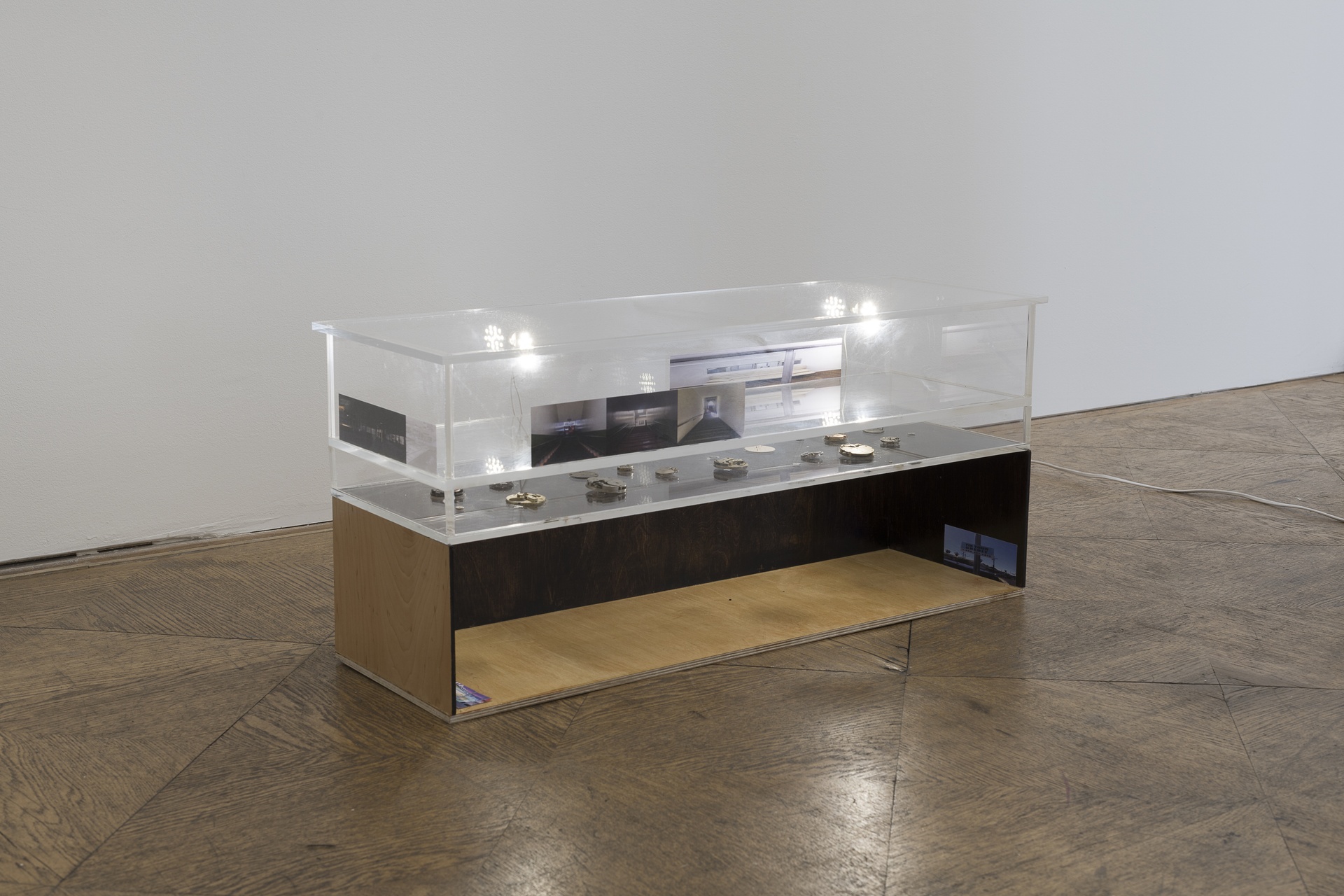


Hélène was born in 1995 in a beach town in Brittany, France. After an initial education in textile arts, she graduated from a MFA at the École nationale supérieure d'arts de Paris-Cergy (France) and a MA from the Critical
Studies Department at the California Institute of the Arts (USA).
Her work has recently been exhibited, amongst others or alone, at MUDAM Luxembourg (2026), Lo Brutto Stahl, Basel (2026), FRAC Lorraine (2026), Room_3557, Los Angeles (2026), Fondation Pernod Ricard, Paris (2025), Tonus, Paris (2025), and the Brooklyn Museum, New-York (2023). Some of her poems have been read at the International Poetry Center of Marseille
and at Centre Wallonie-Bruxelles, Paris.
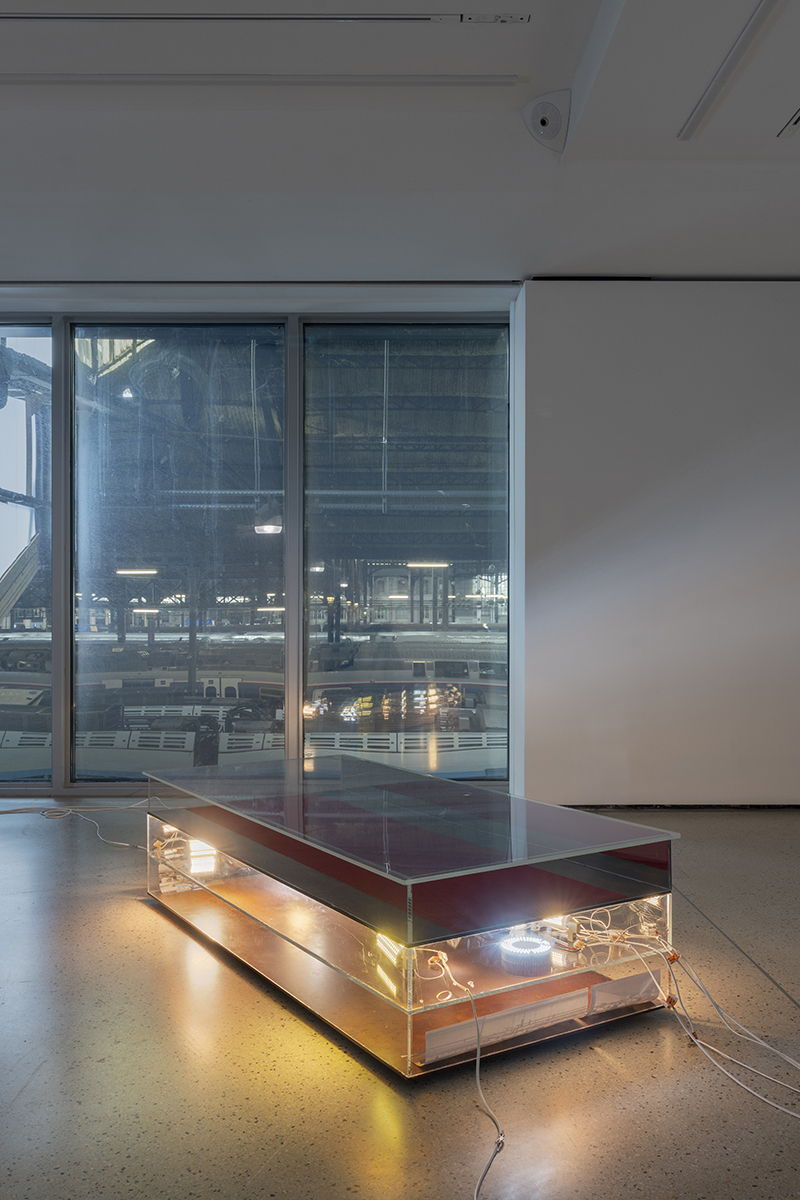
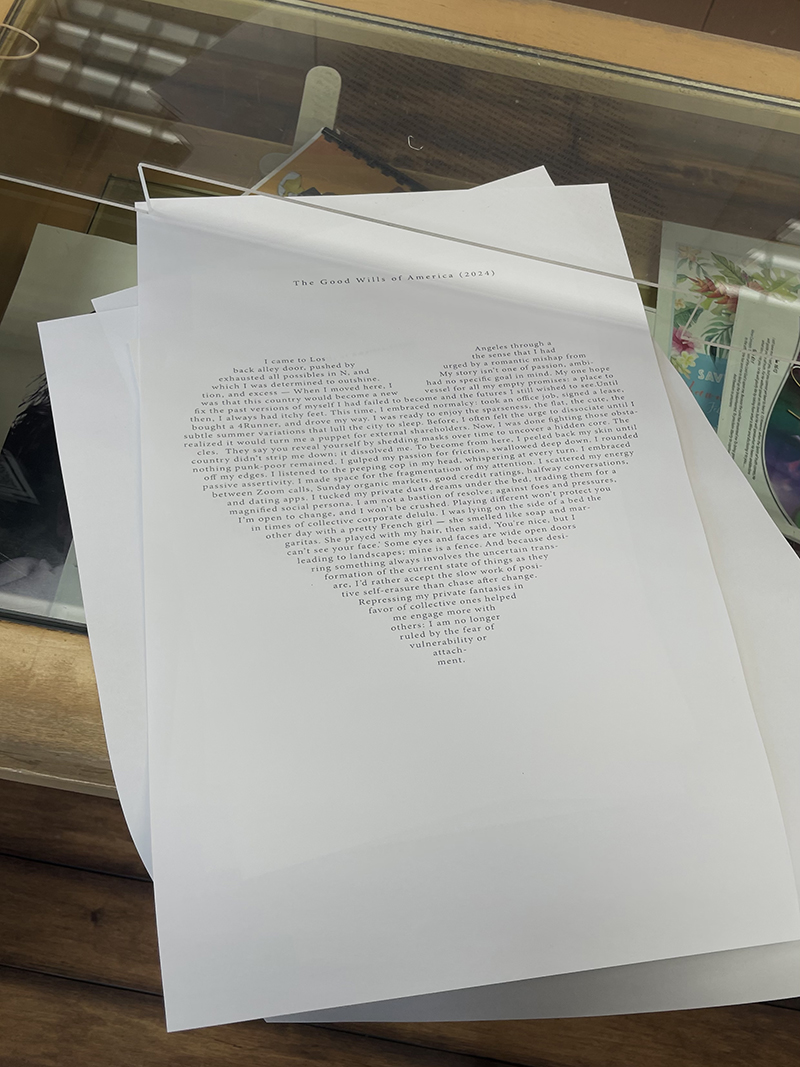
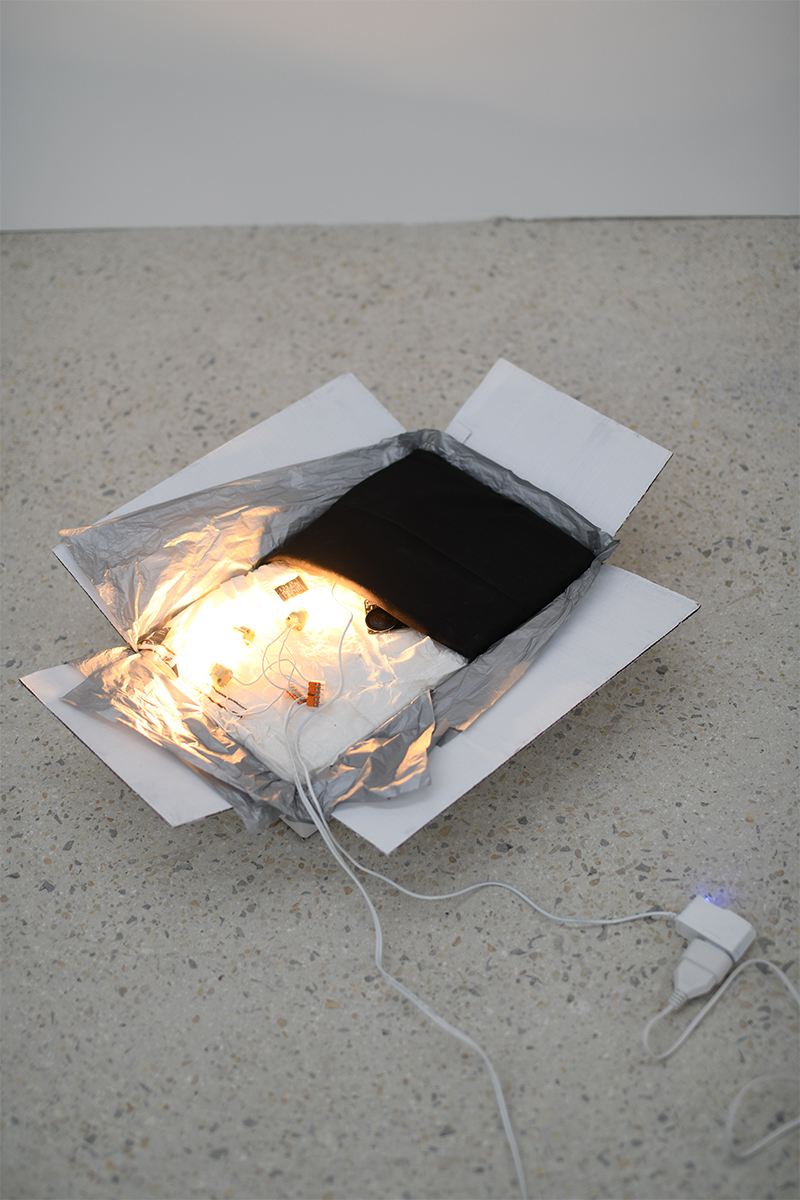
Influenced by Sara Ahmed’s theories on emotions as shared social constructs, Hélène shapes ambiguous, intimate stories to challenge conventional narratives. Through her hide-and-seek approach, she engages with the threads of loss, desire, and fantasy that bind us to one another and the world. Working with light as a primary material, she returns the material to the principle of its paradox: being at once that which makes vision possible and, at too high an intensity, that which cancels it.
Influenced by Sara Ahmed’s theories on emotions as shared social constructs, Hélène shapes ambiguous, intimate stories to challenge conventional narratives. Through her hide-and-seek approach, she engages with the threads of loss, desire, and fantasy that bind us to one another and the world. Working with light as a primary material, she returns the material to the principle of its paradox: being at once that which makes vision possible and, at too high an intensity, that which cancels it.
(...)
"To me, many of Hélène’s sculptures embody a movement that oscillates between feelings of detachment and adhesion—both with oneself and the world. This relationship with otherness, both individual and collective, reminds me of an idea uttered by Franco “Bifo” Berardi, which has long resonated with me. The writer suggests “not focusing on the flow, but on one’s own breath. Don’t follow the external rhythm, but breathe normally”.
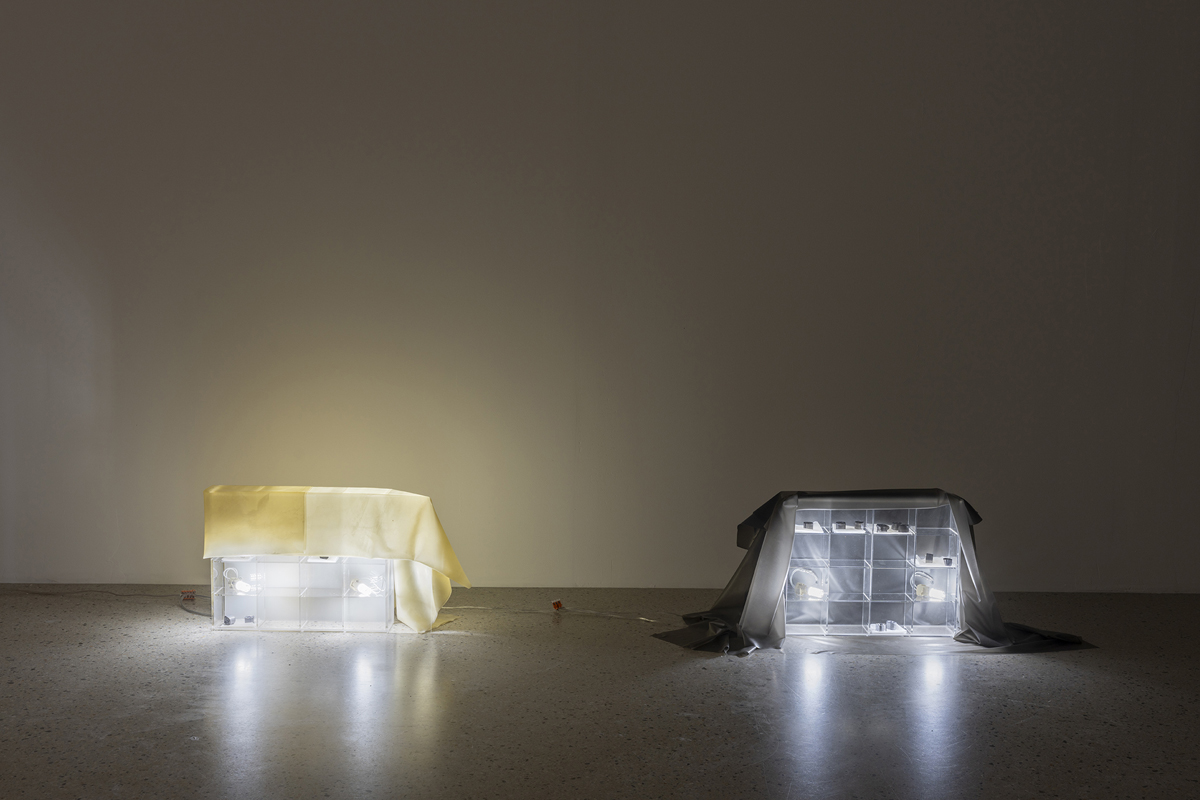
I tie these words to the two sculptures in Our Conversations, which breathe in and out in response to one another until they fall into complete desynchronization. Here, arrhythmias emerge, producing and highlighting a necessary dysfunction."
I tie these words to the two sculptures in Our Conversations, which breathe in and out in response to one another until they fall into complete desynchronization. Here, arrhythmias emerge, producing and highlighting a necessary dysfunction."
Elise Legal